

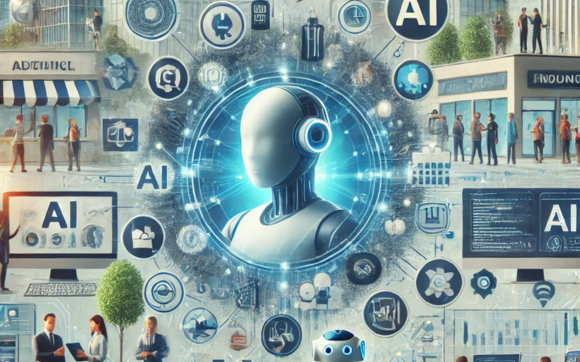
The rapid evolution of Artificial Intelligence (AI) has been nothing short of transformative, impacting industries from healthcare to finance and beyond. As this technology continues to advance, a significant trend is emerging: the rise of AI agents. But why is the entire AI field gravitating towards AI agents, and what does this mean for businesses and individuals alike? In this blog, we will explore the driving forces behind this shift and how AI agents are poised to revolutionize the way we interact with technology.
Understanding AI Agents
Before diving into why AI agents are becoming central to the AI landscape, it’s essential to understand what they are. An AI agent is an autonomous entity that can perceive its environment, process information, make decisions, and take actions to achieve specific goals. These agents are designed to operate with minimal human intervention, learning from their experiences and improving their performance over time.
AI agents can take various forms, including:
- Virtual Assistants: Like Siri or Alexa, these agents help users with tasks such as scheduling, information retrieval, and smart home control.
- Chatbots: Deployed in customer service, these agents interact with users to answer queries, resolve issues, and even facilitate transactions.
- Robotic Process Automation (RPA): These agents automate repetitive tasks in business processes, such as data entry and invoicing.
- Autonomous Vehicles: AI agents drive cars, drones, and other vehicles, making real-time decisions to navigate and avoid obstacles.
The Shift Towards AI Agents: Why Now?
The growing emphasis on AI agents can be attributed to several factors:
- Increasing Complexity of Tasks: As businesses and industries become more complex, the need for automation to manage and execute intricate tasks has risen. AI agents are capable of handling this complexity, making decisions based on vast amounts of data in real time.
- Advancements in Machine Learning: Machine learning, a subset of AI, has made significant strides in recent years. These advancements allow AI agents to learn from data, adapt to new situations, and improve their decision-making abilities. This continuous learning process is crucial for AI agents to remain effective in dynamic environments.
- Demand for Efficiency and Productivity: In a competitive global market, businesses are constantly seeking ways to enhance efficiency and productivity. AI agents can automate routine tasks, allowing human employees to focus on higher-value activities. This not only boosts productivity but also reduces operational costs.
- Scalability: AI agents offer scalability that traditional systems cannot match. Once developed, an AI agent can be deployed across multiple locations or platforms without significant additional investment. This scalability is particularly valuable for businesses looking to expand their operations or improve their customer service capabilities.
- Improved User Experience: AI agents are designed to interact with users in a natural, intuitive manner. Whether it’s through voice commands, text-based chat, or other interfaces, AI agents can provide a seamless user experience, making technology more accessible and easier to use.
How AI Agents Are Transforming Industries
The impact of AI agents is being felt across various industries, each benefiting from the unique capabilities these agents bring to the table.
Healthcare: In healthcare, AI agents are revolutionizing patient care by providing personalized treatment recommendations, monitoring patients’ vital signs, and even assisting in surgeries. Virtual health assistants can engage with patients, answer their questions, and provide timely reminders for medication or appointments, improving overall patient outcomes.
Finance: The finance industry is leveraging AI agents to enhance fraud detection, streamline loan approvals, and optimize trading strategies. AI agents can analyze vast amounts of financial data in real time, identifying patterns and making predictions that would be impossible for human analysts to achieve with the same speed and accuracy.
Retail: Retailers are using AI agents to personalize shopping experiences, manage inventory, and optimize supply chains. Chatbots are increasingly being deployed to assist customers with product recommendations, order tracking, and even processing returns, enhancing customer satisfaction and loyalty.
Manufacturing: In manufacturing, AI agents are driving automation on the production floor, improving quality control, and predicting equipment failures before they occur. By analyzing data from sensors and other sources, AI agents can optimize production processes and reduce downtime, leading to significant cost savings.
Education: AI agents are also making their mark in education, where they are used to provide personalized learning experiences, grade assignments, and even tutor students. These agents can adapt to individual learning styles and pace, making education more effective and accessible.
The Future of AI Agents: What Lies Ahead?
The trajectory of AI agents suggests that their role in our lives will only continue to grow. As these agents become more sophisticated, they will likely take on even more complex tasks, further reducing the need for human intervention in certain areas. The future may see AI agents working alongside humans in more collaborative roles, where they complement human decision-making and creativity.
However, the rise of AI agents also raises important ethical and societal questions. As these agents take on more responsibilities, it is crucial to consider issues such as data privacy, security, and the potential displacement of jobs. Ensuring that AI agents are designed and deployed in a way that benefits society as a whole will be key to realizing their full potential.
Conclusion
The entire AI field is headed towards AI agents because they offer a powerful combination of autonomy, adaptability, and efficiency. From healthcare to finance, these agents are transforming industries by automating complex tasks, improving decision-making, and enhancing user experiences. As we continue to develop and refine AI agents, their impact on our world will only grow, offering exciting opportunities for innovation and progress.
If you’re interested in learning more about how AI agents can benefit your business, we invite you to book a consultation with our experts. Whether you’re looking to implement AI agents in your operations or simply want to explore the possibilities, we’re here to help you navigate the future of AI.